

PECVD: Plasma Enhanced Chemical Vapour Deposition
PECVD: what it is, how it works, and differences from standard thermal CVD
PECVD (Plasma Enhanced Chemical Vapour Deposition) is a deposition technique in which precursor gases are introduced into a reduced-pressure chamber and chemically decomposed using the energy of a plasma, forming a solid film on the substrate. The plasma, the activating agent of the process, allows for working at significantly lower temperatures compared to conventional thermal CVD, expanding compatibility with heat-sensitive substrates.
Thermal CVD vs. PECVD: the substantial difference
In standard thermal CVD, the decomposition of precursor gases is activated exclusively by heat: the substrate must reach temperatures often exceeding 600 °C. In PECVD, plasma replaces heat as the activating agent, allowing deposition at substrate temperatures that can drop to 100–300 °C, making the process compatible with materials that would not tolerate higher temperatures.
PECVD and PVD: two distinct techniques, a common context
PECVD is classified as a CVD technique, not PVD: in PVD, the material starts from a solid (the target) that is physically vaporized; in PECVD, it starts from precursor gases that are chemically decomposed. However, the use of plasma and the low operating temperatures bring it closer to the PVD ecosystem, so much so that the two processes are often complementary in the same production context.
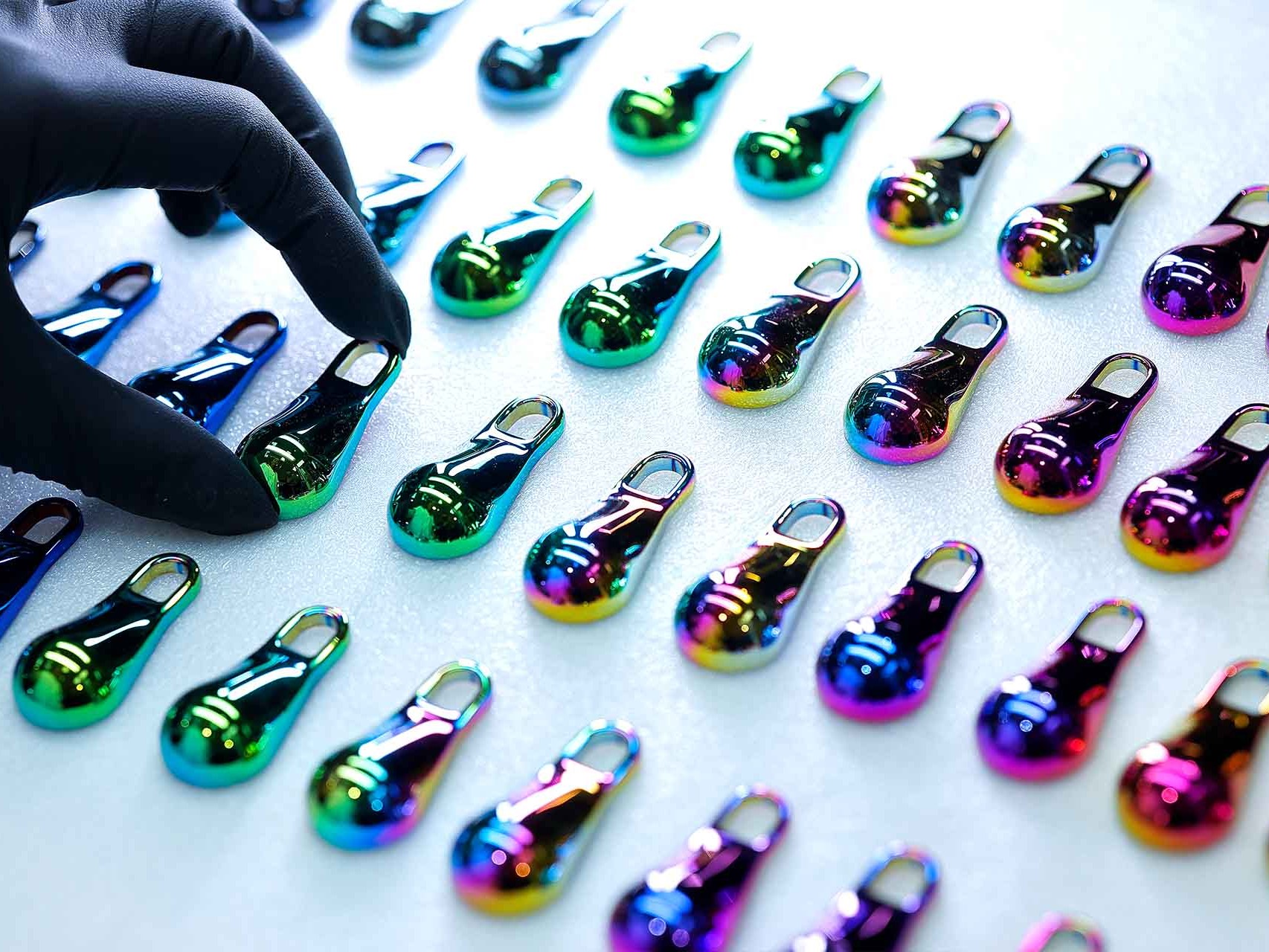
Among the films obtainable with PECVD, the most relevant in industrial and decorative fields is DLC (Diamond-Like Carbon): a layer with very high hardness, low friction, and wear resistance, applicable as a functional finish on precision components or as an additional protective layer over a PVD coating.
Process parameters and film control
The properties of the PECVD film, hardness, density, mechanical stress, transparency, depend on plasma power, chamber pressure, and the ratio between precursor gases. The combination of these parameters makes PECVD a flexible technique but demanding in terms of repeatability: small variations produce films with significantly different characteristics.
Related terms: Reactive deposition · PVD Target

Did you find the article interesting? Share it now.
Did you find something interesting? Contact us now!
LEM technicians are ready to address any questions or concerns you may have.
Request more information and discover our tailor-made solutions.