

PVD vs. Electroplating: Differences, Advantages, and Limits
Surface Coating Technologies Compared
The most widespread surface coating technologies in industry and high-end design are traditional electroplating (galvanic process) and PVD (Physical Vapor Deposition). Both improve the aesthetics and performance of surfaces, but they differ profoundly in their deposition mechanisms, final properties, costs, and environmental impact. Understanding these differences helps in choosing the most suitable technology based on applications, required performance, and sustainability.
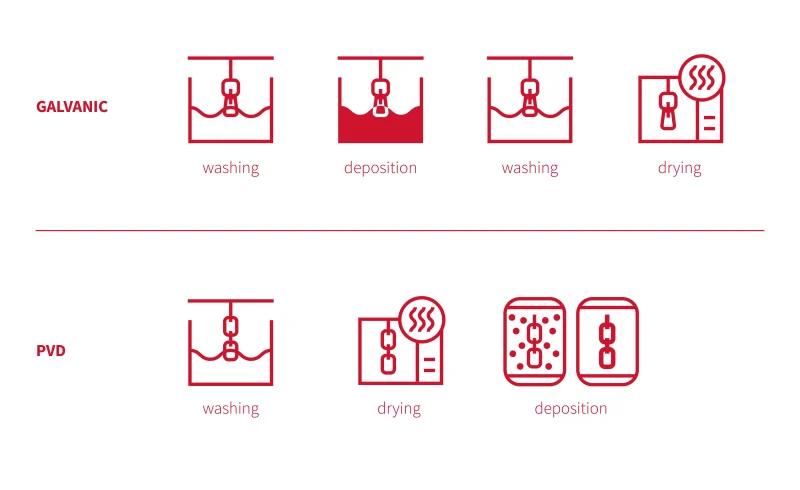
How Galvanic and PVD Processes Work
Galvanic (Electroplating)
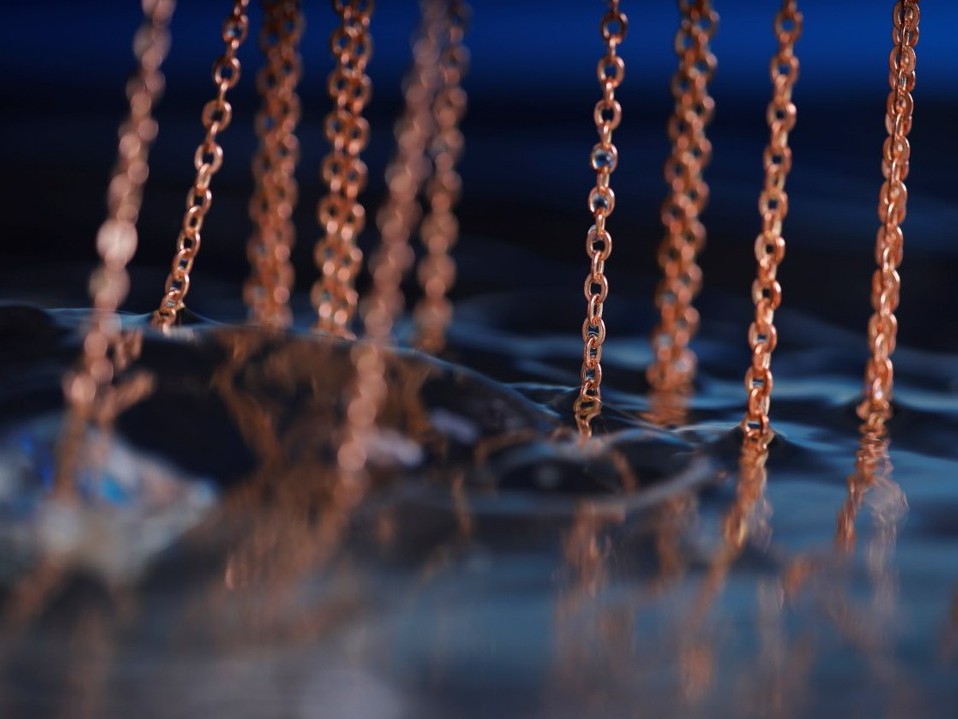
Allows for the deposition of relatively thick and continuous metallic layers (nickel, copper, gold, palladium, ruthenium, etc.), serving both an aesthetic and protective function. It also contributes to resistance, corrosion protection, and substrate preparation for subsequent treatments.
PVD (Physical Vapor Deposition)
Allows for the deposition of thin, continuous, and highly hard layers, both metallic and ceramic (such as TiN, CrN, ZrN), offering high performance in terms of wear resistance, surface stability, and finish durability.
Methodological Premise
Before detailing the individual processes, it is necessary to specify the parameters considered for this article.
In this article, when discussing the galvanic process and the PVD process, the comparison refers exclusively to the actual coating phase. “Process” therefore means the segment where the accessory enters the surface treatment plants, whether galvanic or PVD, and exits with the applied finish. Operations prior to or following the deposition, such as mechanical preparation, polishing, assembly, or other phases outside the coating cycle, are not included in this scope.
However, water consumption related to functional washing within the coating cycle is included. For PVD, preparatory washing of the accessory before entering the system is included. For electroplating, both pre-cycle washing and post-deposition washing, necessary for stabilizing and cleaning the piece after treatment, are included. In this way, the comparison accounts for the actual water usage tied to the coating phase, while excluding everything not directly functional to the application of the surface finish.
It is necessary, however, to make a distinction when analyzing the environmental impact of PVD. Depending on the base material, particularly brass, zamak, or aluminum, the PVD coating may require a preparatory galvanic cycle before the actual deposition. In these cases, the scope of PVD no longer coincides solely with the chamber phase but also includes the preliminary galvanic treatment, which must be added to the overall consumption, especially of water.
For this reason, when comparing PVD and electroplating in terms of sustainability, it is essential to clarify whether we are talking about PVD applied on compatible substrates without galvanic pre-treatments, or PVD cycles that include a galvanic preparatory phase. The two scenarios have different environmental profiles and are not directly comparable.
Sustainability of Galvanic and PVD Processes
In this first, yet most delicate point, we will look at safety and environmental impacts. There are various accounts on this topic that can sometimes lead to conflicts of interest. In our case, having mastery of both technologies, we aim to highlight the differences by seeking a balanced comparison between the two.
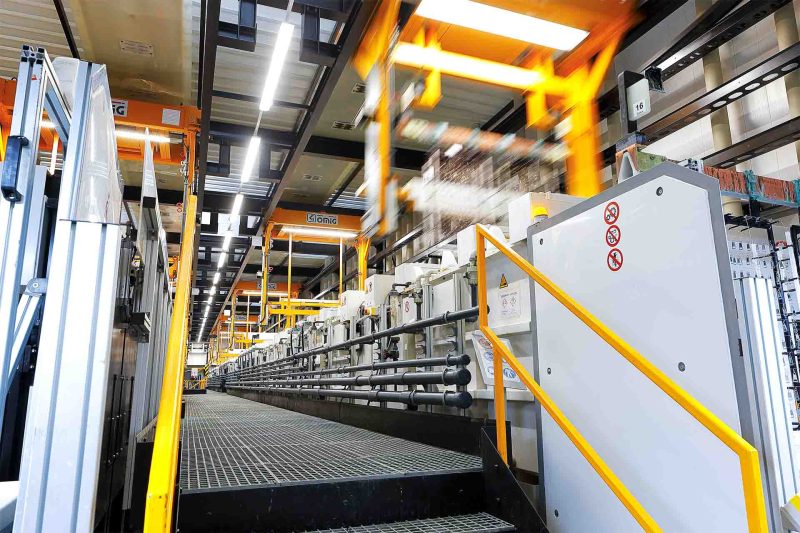
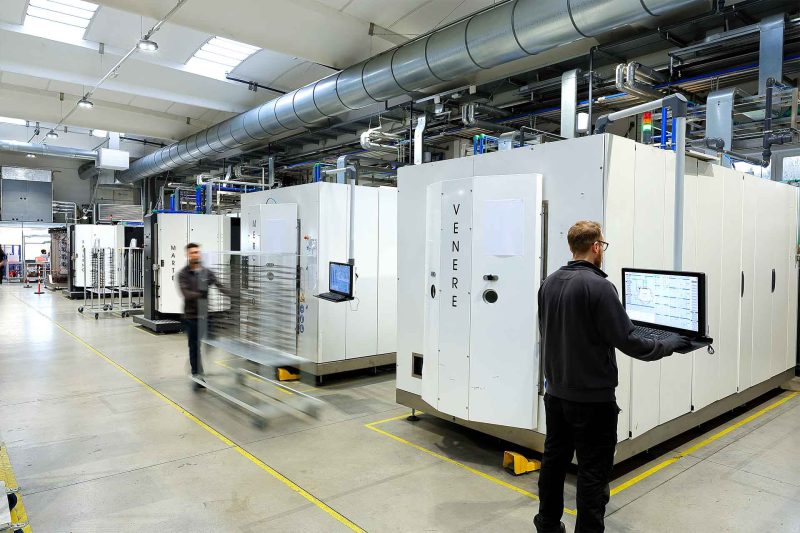
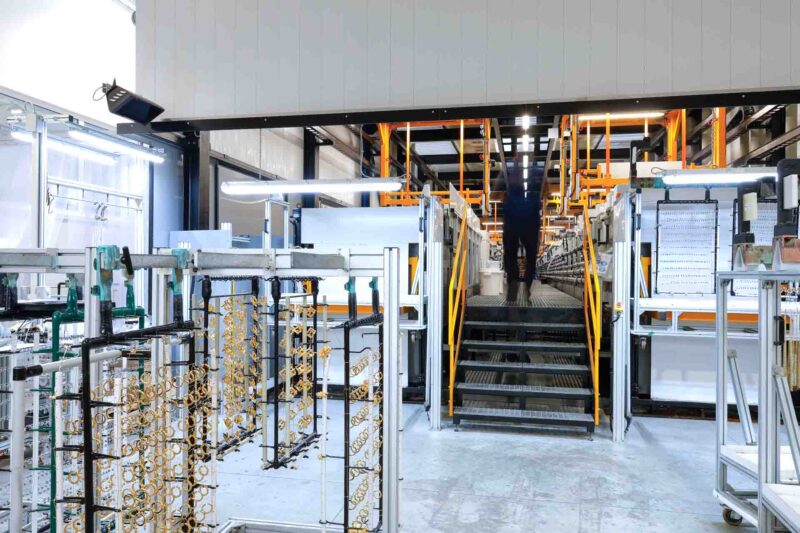
The following points derive from data collected from the automated Monster plant and the PVD department:
- Safety: The galvanic process exposes operators to a higher risk due to the presence of hazardous chemicals in the process. Despite this, it is considered a sector with a low accident rate.
- Water: According to our KPIs, a PVD plant requires about ⅓ of the water compared to an advanced automatic galvanic plant (water consumption in cubic meters/treated surface).
- Waste: The quantity of solid and liquid waste produced by a PVD plant is generally comparable. The real difference lies in the concentrated waste (sludge), which in PVD is about 80% lower than in a galvanic plant.
- Energy: Energy consumption is generally comparable according to our KPIs.
-
Metals: When comparing PVD and electroplating, it is necessary to clearly distinguish between metal dispersion and overall metal consumption. The two metrics do not coincide and respond to different process logic.
- Dispersion: PVD is inherently more dispersive per single process, as a significant part of the vaporized metal deposits on the supports and internal surfaces of the process chamber. Electroplating, driven by the conduction of electric current, allows for a more selective deposition and lower dispersion.
- Consumption: However, the ability of PVD to deposit various thin layers of different materials with similar chromatic characteristics allows for achieving customer-required performance with significantly lower precious metal thicknesses compared to electroplating. It is exactly this difference in operational thickness that makes the comparison of metal consumption not solely reducible to dispersion per cycle.
Based on our data, PVD has a lower impact in many sustainability categories, both environmental and social. However, it is misleading to define an accessory as “more sustainable” based solely on its surface treatment. This assessment must also consider pre- and post-coating processes, as discussed in the methodological premise, as well as the substrates to which the coatings are applied, each having its own supply chain and specific environmental impacts.e che dei substrati su cui i rivestimenti vengono applicati, ciascuno con una propria filiera e specifici impatti ambientali.
Types of Finishes Obtainable via Galvanic and PVD
We list here the main finishes related to our services, as well as the most common ones linked to the world of electroplating and PVD. They are not intended to be absolute.
Galvanic
- Traditional metals: nickel, gold, copper, bronze, palladium, ruthenium.
- Appearance: glossy, satin, sandblasted, classic aged.
- Chromatic customization: possible but limited compared to PVD, especially with noble metals or vibratory treatments.
PVD
- Advanced compounds: metal nitrides and carbides, ceramic films.
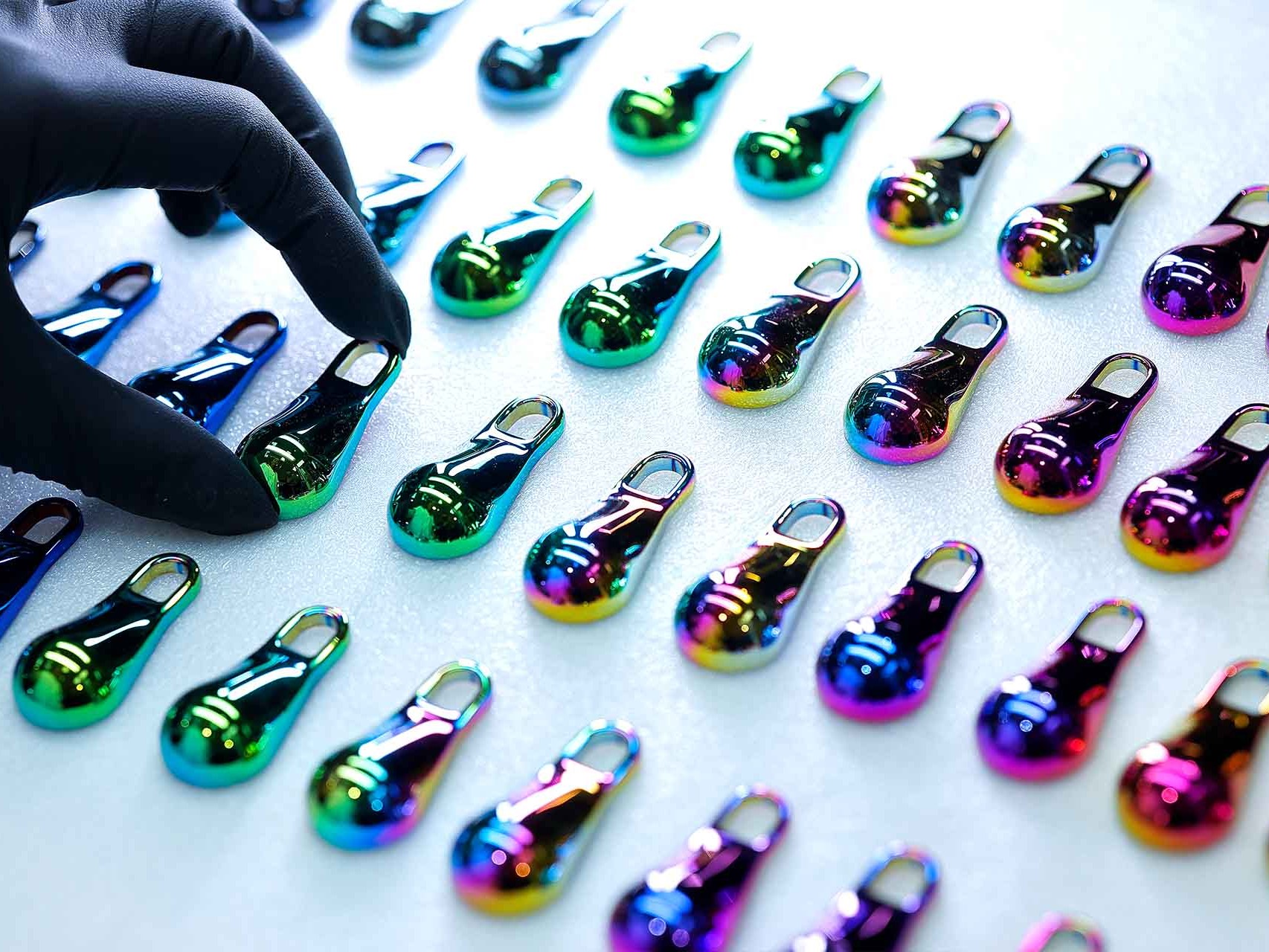
- Finishes: gold, black, bronze, rose gold, copper, special colors (rainbow) with excellent chromatic stability.
- Appearance: glossy, matte, satin, sandblasted.
Electroplating is ideal when a classic metallic appearance (gold, ruthenium, etc.) or an antiqued look is desired, in addition to the ability to achieve significant thicknesses and a leveling effect, for both aesthetic and protective purposes. PVD, on the other hand, offers a wider variety of colors and ensures high surface performance, but it does not replace the structural protective function typical of galvanic coatings.
Corrosion and Wear Resistance: PVD and Galvanic Compared
Corrosion
- Galvanic: Thick layers of nickel, bronze, and palladium offer excellent protection against oxidation and corrosion, especially in marine or industrial environments.
- PVD: Thanks to their density and chemical nature, the films have high corrosion resistance, often superior to that of thin galvanic finishes. Clarification: the corrosion resistance is exclusively attributable to the PVD film. It does not increase the overall resistance of the accessory.
Wear and Hardness
- Galvanic: Moderate mechanical resistance (typical hardness 300–800 HV).
- PVD: Ceramic compounds can reach very high hardness levels (e.g., 1800–2500 HV or more), improving resistance to scratches and abrasion.
PVD excels in wear resistance; electroplating can be more effective as a corrosion barrier when thick layers are deposited. For this reason, unless intrinsically stainless materials like stainless steel or titanium are used, it is generally necessary to provide a galvanic pre-treatment before applying PVD.
PVD vs Galvanic: Process Differences
Galvanic
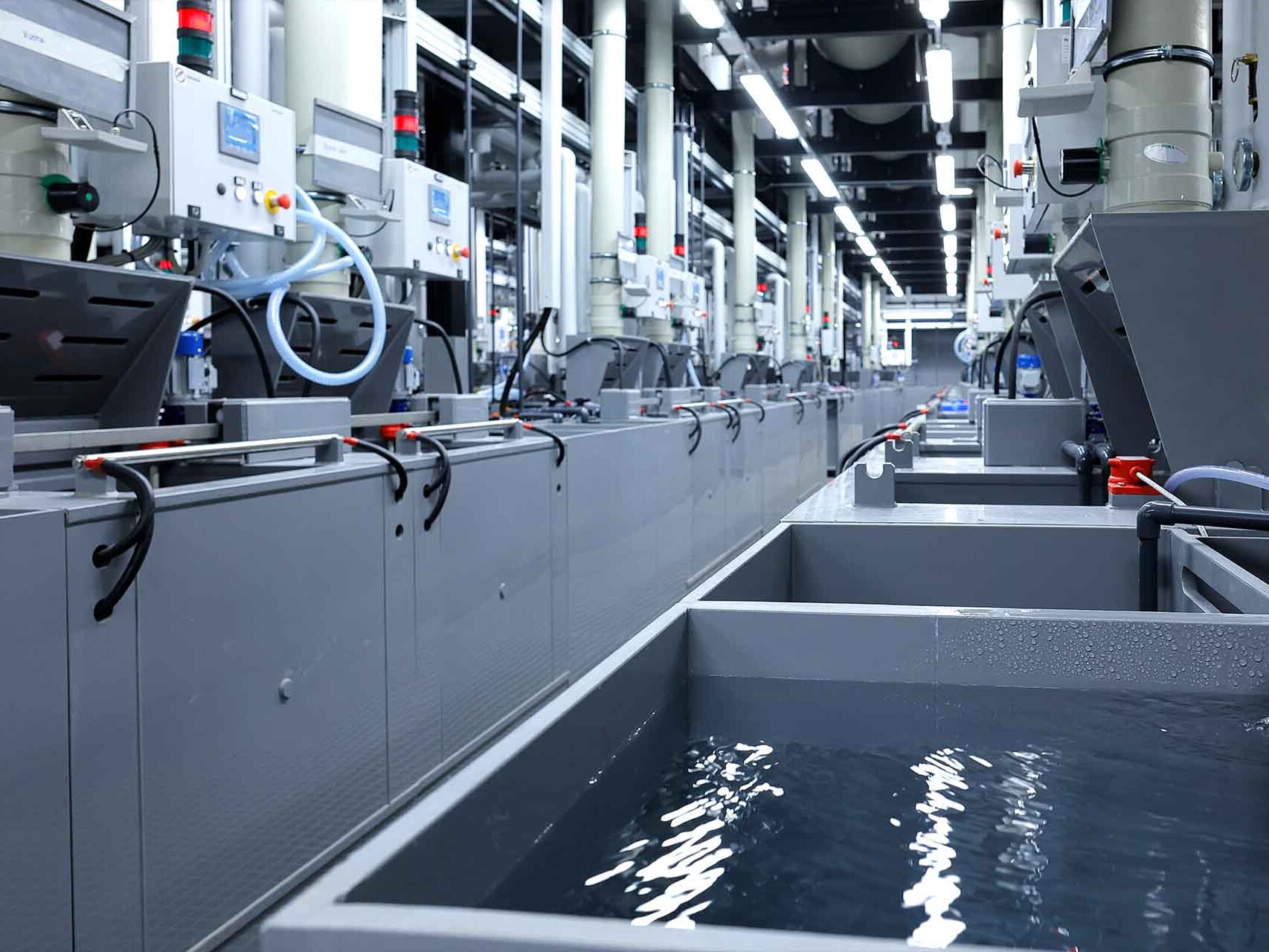
- Uses aqueous electrolytic baths based on the salts of the metal to be deposited via the electrodeposition process.
- Requires wastewater management and treatment.
- Involves the use, handling, and disposal of processing chemicals.
PVD
- Dry process, in a vacuum, in the presence of technical gases. Deposition occurs via the sublimation of a target of the metal to be deposited.
- Depending on the base material on which the deposition is performed, a preparatory galvanic coating might be necessary.
- Lower waste and emissions, easier environmental compliance management.
- Water consumption and waste are significantly lower than electroplating, but not absent.
In summary, electroplating and PVD differ not only in the deposition technology but in the entire process infrastructure that supports them. Electroplating is structurally tied to the intensive use of water and chemistry, whereas PVD originated as a dry, lower-impact process, albeit with some variables tied to the base material and potential pre-treatments. Therefore, any serious comparison must always be read in light of the actual cycle applied to the individual accessory, not as an abstract opposition between technologies.
Product Life Cycle
Galvanic
Ideal when the coating thickness has a significant structural or protective function, for example in components subject to intense corrosion. It also allows for achieving aging and stratified patination effects, which in some aesthetic and design areas represent an added value to the product over time (vintage effect).
PVD
Offers a longer useful life thanks to the high hardness and typical resistance of the various layers deposited on the substrate. Compared to electroplating, for the same coating thickness, a PVD accessory tends to wear much more slowly.
Galvanic and PVD respond to different life cycle logics (taking into account the substrate and thicknesses). The choice of technology must therefore consider not only the expected durability but also the intended use of the finished product.
PVD or Galvanic? When to Choose Each Technology
Choose Galvanic when:
- A thick protective barrier against aggressive corrosive environments is required.
- A leveling operation is needed due to imperfections in the material.
- The component’s geometry is not compatible with the vacuum processes typical of PVD.
- Vintage post-deposition processing is planned.
Choose PVD when:
- High wear resistance is required.
- A wide range of finishes is desired.
- The product has a long expected useful life.
- A precious color effect is desired without the use of noble metals.
The choice between PVD and electroplating should not be seen as an exclusive alternative between competing technologies, but as a design decision based on material, color, geometry, usage conditions, and expected product life. In many cases, PVD and electroplating can be considered complementary technologies that, depending on the accessory’s substrate, can work in synergy, where one represents the natural technical continuity of the other within the same production cycle.
Conclusions: Choosing the Right Technology
PVD and electroplating are not competing technologies: they are different tools for different needs. The choice to use one technology over the other always depends on the specific project: substrate materials, performance requirements, production volumes, target market, and environmental goals.
LEM technicians are available to analyze your case and identify the most suitable coating solution. Contact us for a consultation.

Did you find the article interesting? Share it now.
Did you find something interesting? Contact us now!
LEM technicians are ready to address any questions or concerns you may have.
Request more information and discover our tailor-made solutions.