

PVD treatment in the fashion sector: applications on accessories, jewelry, and watches
PVD (Physical Vapor Deposition) has become a benchmark standard in fashion and luxury for a simple reason: it offers what the sector demands: stable colors, premium finishes, and high wear resistance, expanding the technical possibilities of traditional electroplating. In this article, we will look at how decorative PVD works, which products are suitable for the treatment, the available color options, and, above all, the practical considerations that those who design or commission the treatment must keep in mind: treatable geometries, substrate preparation, and the most common defects.
Decorative PVD: what distinguishes it from electroplating
Decorative PVD coating deposits ultra-thin layers of material, in the range of hundreds of nanometers, directly onto the substrate in a controlled vacuum environment. The result is greater surface hardness and scratch resistance that meets the strictest protective standards demanded by the market today.
Another significant advantage concerns the process impact: PVD technology operates entirely dry and without liquid emissions, offering brands an additional tool to meet the rigorous ESG criteria and REACH specifications of the supply chain.
In production practice, PVD and electroplating are not always mutually exclusive; on the contrary, they are often applied in combination. A typical example is electroplated gold as a base layer, which uniforms and levels the surface, followed by a final PVD that guarantees the required color and durability. This approach is common on jewelry and accessories where the base substrate, zamak or brass, is not directly compatible with the final aesthetic specifications.
See also: PVD treatments — Electroplating treatments
The color palette: from classics to special finishes
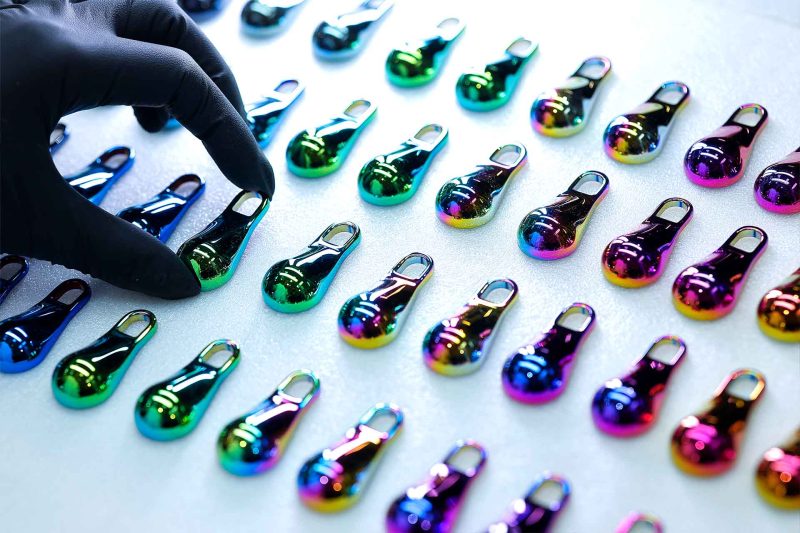
One of the reasons why PVD has conquered the fashion sector is the breadth of the available palette.
The classic colors, gold, rose gold, silver, bronze, brushed steel, cover most of the needs of traditional fashion and luxury. Gold PVD in particular is appreciated for its color stability over time.
On the opposite front, black PVD and its variants, anthracite, gunmetal, have become an aesthetic code in the sporty luxury segment, especially in watchmaking and men’s accessories. The yield of black PVD depends on the target composition and deposition parameters: a technical variable that directly affects the final visual result.
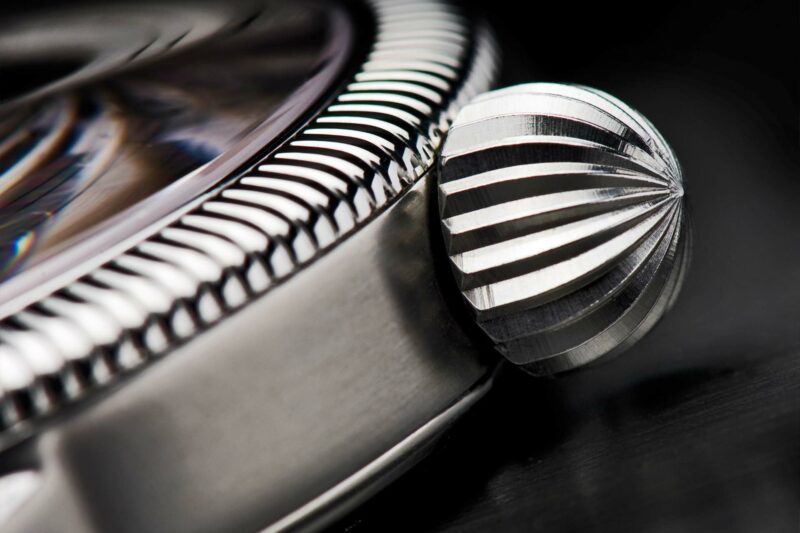
An often underestimated aspect: PVD does not create a finish, it amplifies it. A mechanically brushed surface before treatment will remain brushed afterwards; a glossy surface will remain glossy. The aesthetic quality of the finished piece depends largely on the condition of the incoming substrate.
Applications by product category
Fashion accessories: bags, footwear, eyewear
Buckles, clasps, rings, studs, eyelets, and decorative tips are among the most common components. Typical materials are zamak, brass, and steel, generally with simple geometries and good treatability.
Titanium eyewear represents a case of elective affinity with PVD: titanium is already known for its lightness and biocompatibility, and PVD enhances its chemical resistance, which is fundamental in a product in daily contact with sweat, creams, and perfumes. It is no coincidence that many titanium fronts and temples in the premium ranges are treated with PVD as a production standard.
Jewelry
In the jewelry field, the most frequent substrates are brass, silver, and 316L steel. The choice of process depends on the product’s positioning: in fashion jewelry, thicknesses are decorative and cycle speed matters; in fine jewelry, the requirements for dimensional precision and color uniformity are more stringent.
PVD is used both as a stand-alone treatment, especially on stainless steel, and as a final layer after base electroplating. In the latter case, electroplating guarantees resistance to corrosive agents and improves the component’s aesthetics.
Read also: Zama and zamak: properties and applications
Watches
Watchmaking is the sector where the technical requirements for PVD are the strictest. Cases, bracelets, and case backs require very high dimensional precision: the PVD coating adds a maximum thickness of a few microns, and on components with tight tolerances, this must be considered already in the design phase.
Black PVD is the most requested finish, but it is worth distinguishing it from DLC (Diamond-Like Carbon): both produce a deep black, but DLC offers significantly higher surface hardness (up to 3,000–4,000 HV compared to 2,000–2,500 HV for titanium carbonitride or chromium PVD) against higher costs. The choice depends on the intended use and budget.
Three practical aspects to consider before commissioning the treatment
1. Geometries and shadow zones
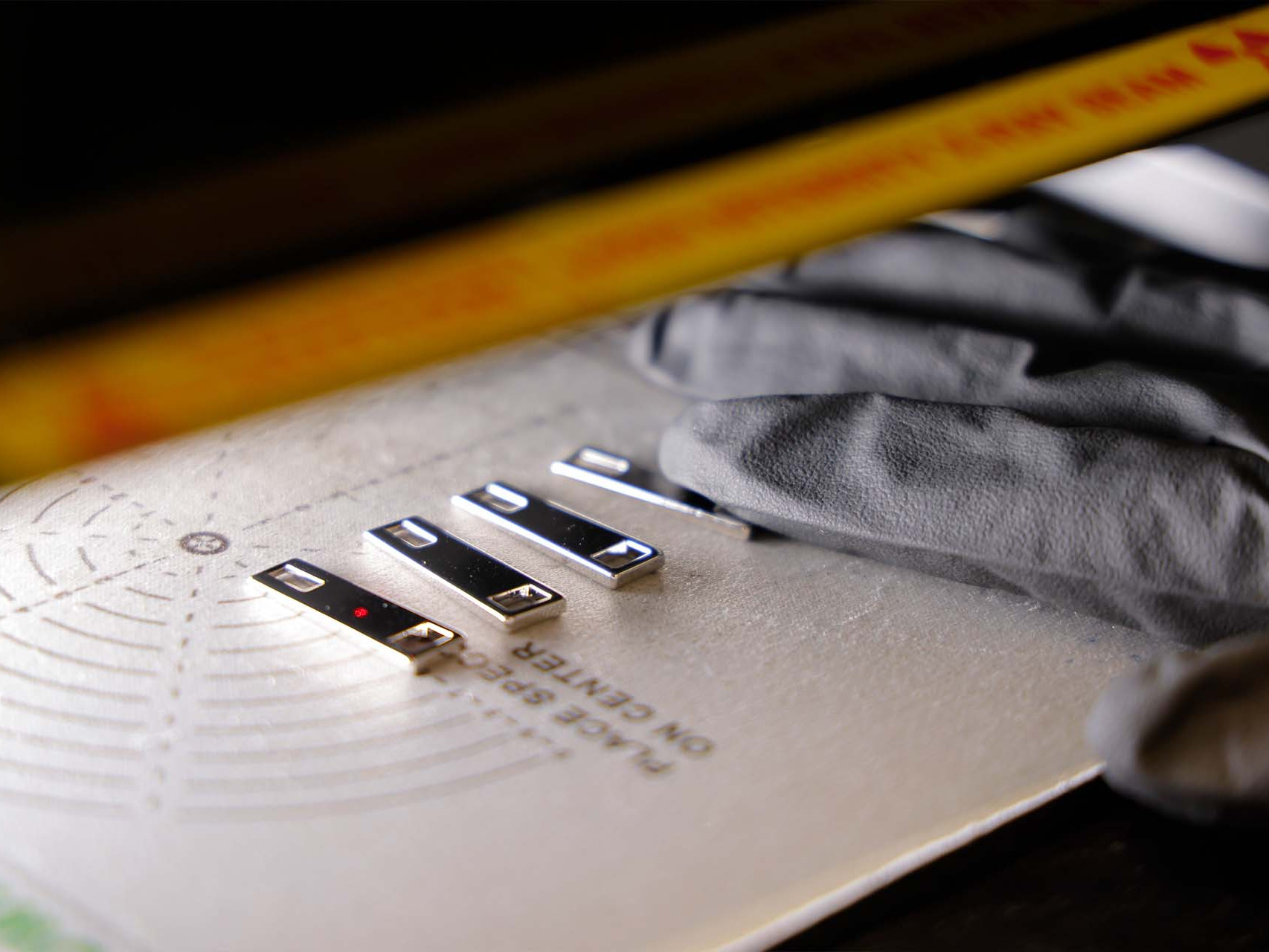
PVD is a line-of-sight process: the vaporized material travels in a straight line inside the chamber and deposits where it “sees” the surface. Deep cavities, blind holes, and undercuts receive an irregular or null deposit.
The solution is not to give up on the treatment, but to design the part holder correctly, with adequate rotation and inclination, and, where possible, take it into account already during the component’s design phase. This is one of the reasons why it is useful to involve the treatment supplier before producing the piece, not after.
2. Surface preparation
PVD does not correct defects: it makes them visible. Any imperfection present on the substrate, machining marks, porosity, traces of oxidation, or oily contaminants, emerges after deposition with great evidence.
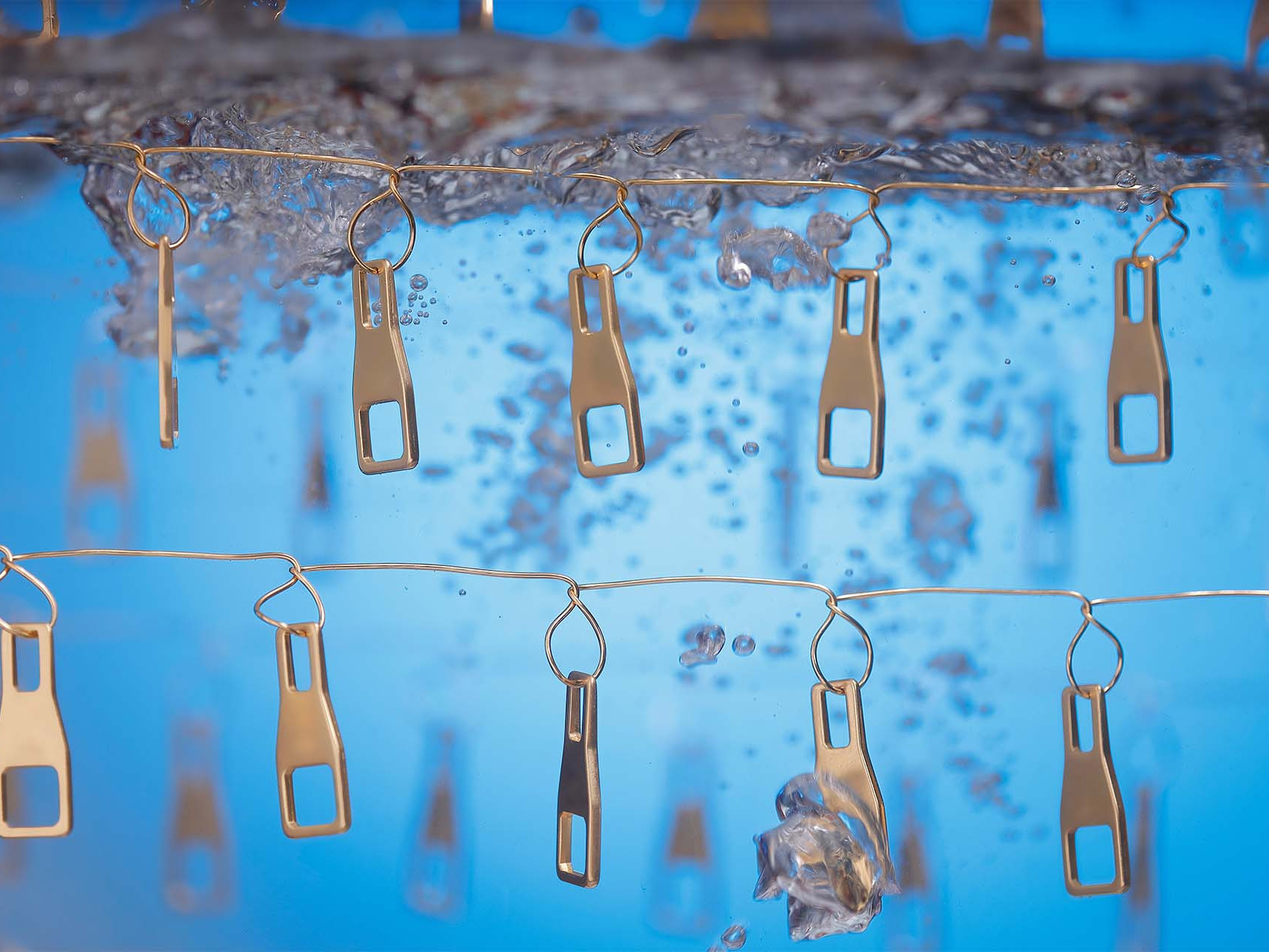
Standard pre-treatments include degreasing with surfactants and ultrasound or solvent washes and, where necessary, base electroplating. The quality of the incoming surface is the variable that, more than any other, determines the outgoing aesthetic quality.
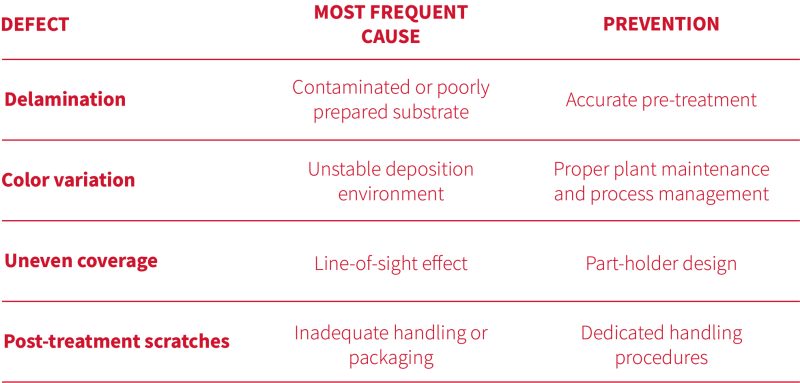
3. Most common defects in PVD treatments
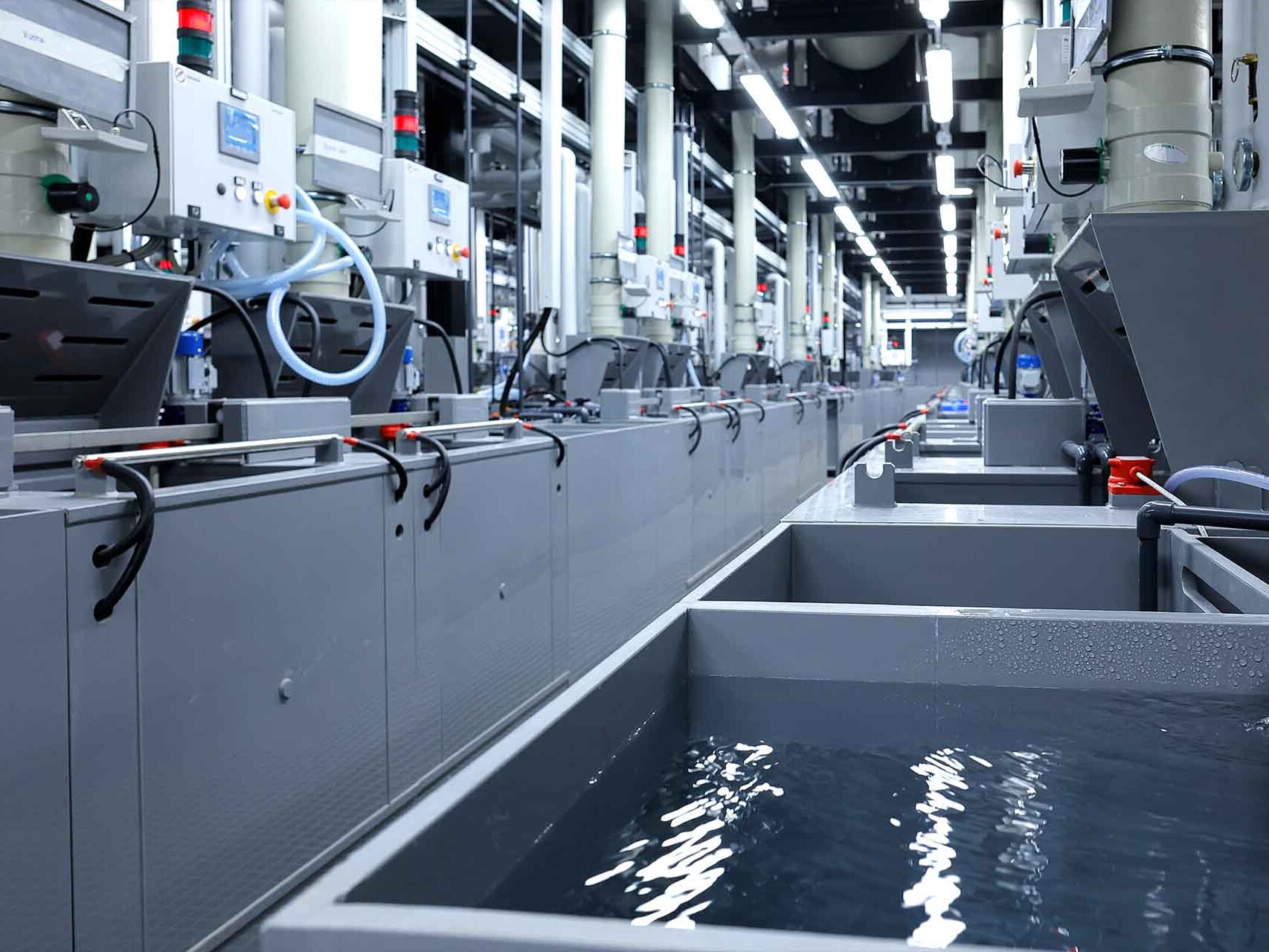
Discover how a PVD plant works
Conclusion
Decorative PVD is today the most versatile technology for obtaining highly varied, premium, and durable color finishes on accessories, jewelry, and watches. Stable colors, compatibility with a wide range of substrates, and wear resistance make it a solid technical choice, provided that the design phase is addressed carefully: part geometries, surface preparation, and the correct definition of the production cycle.
LEM supports its clients from feasibility assessment to sampling, with PVD plants dedicated to the decorative segment. Contact us to analyze your component.

Did you find the article interesting? Share it now.
Did you find something interesting? Contact us now!
LEM technicians are ready to address any questions or concerns you may have.
Request more information and discover our tailor-made solutions.